 Il Duomo
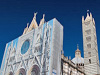
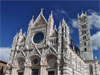
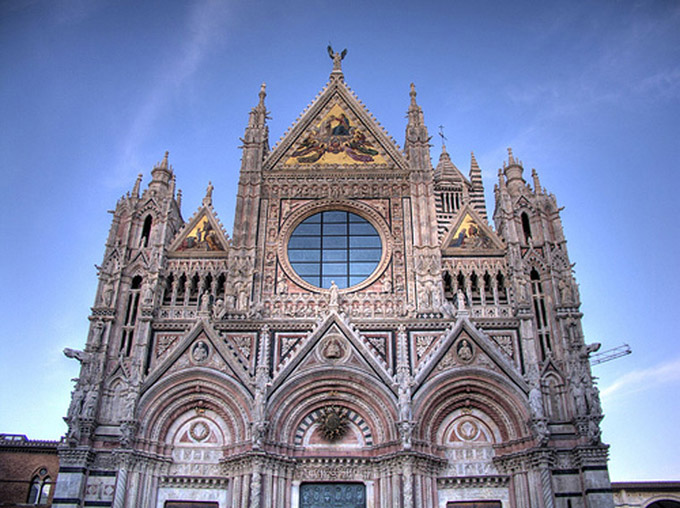
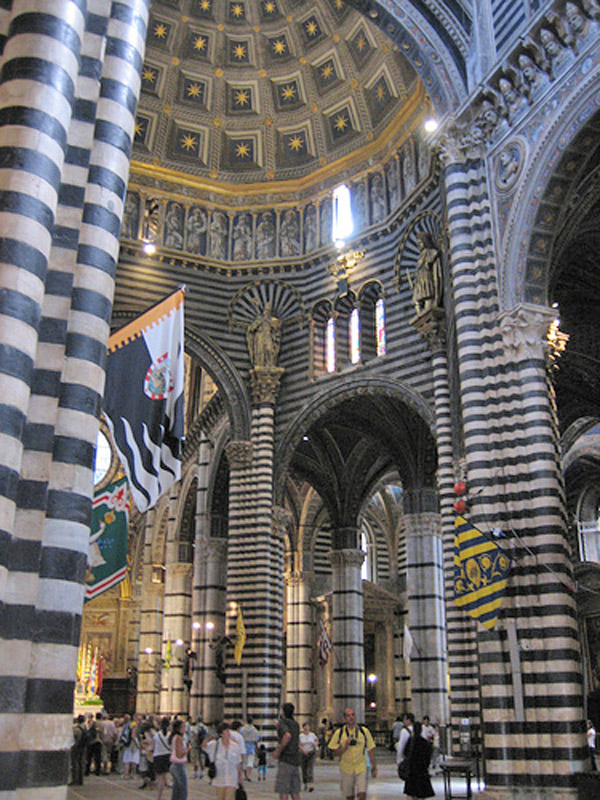
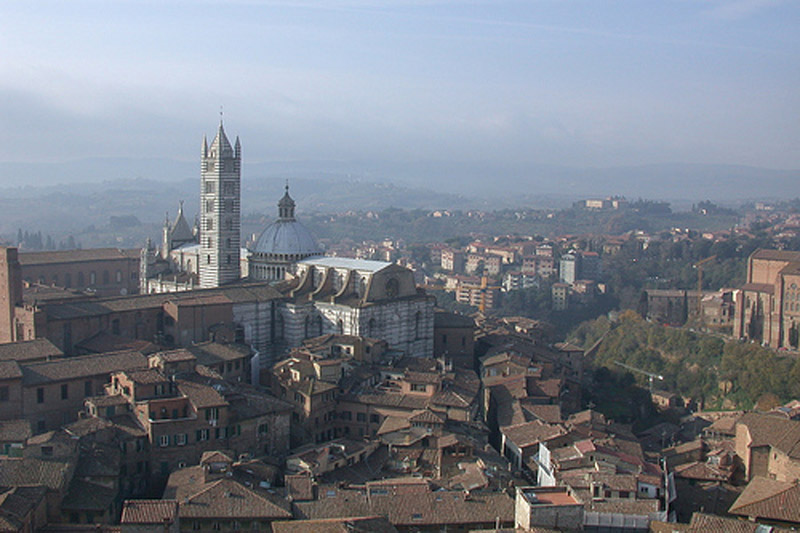
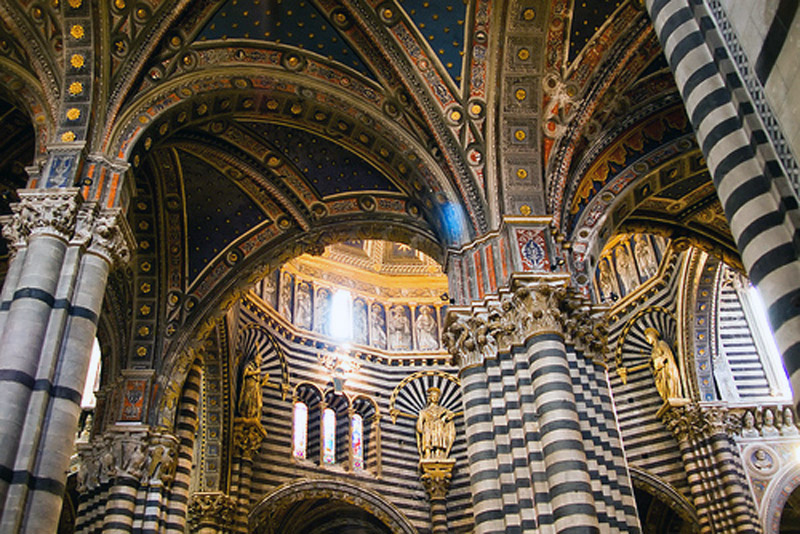
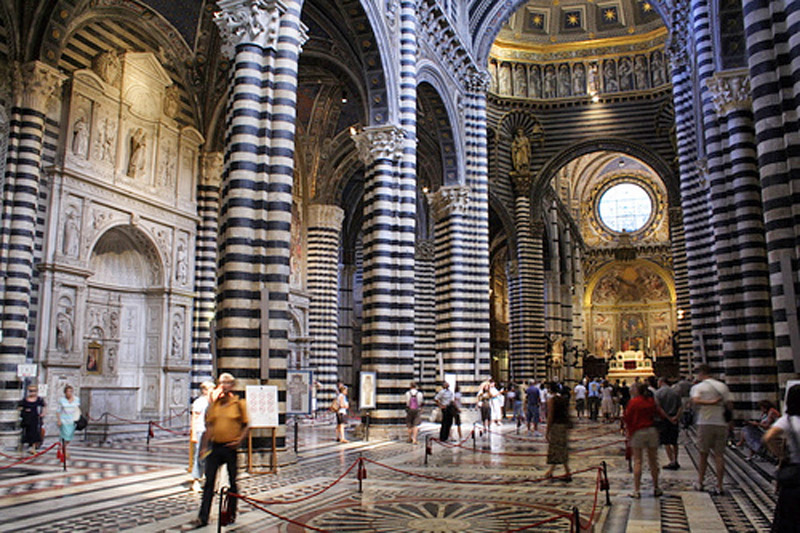
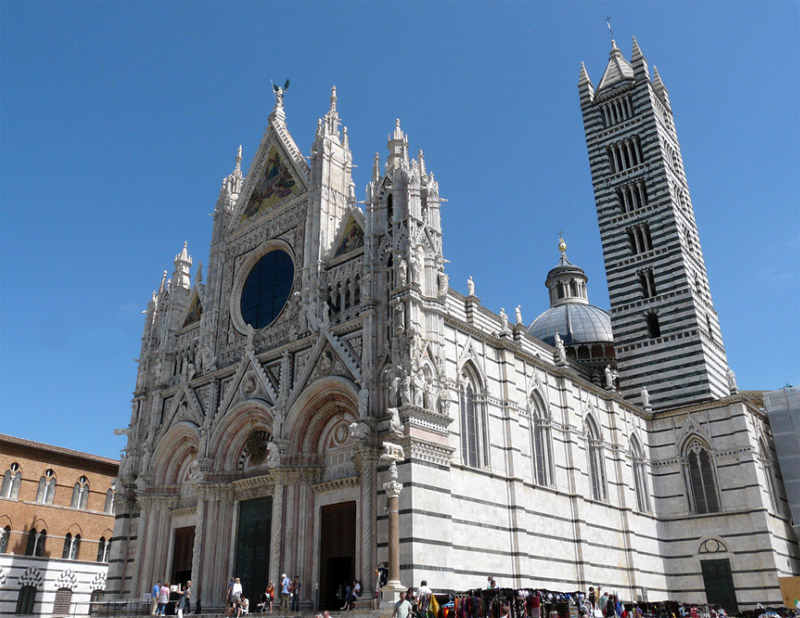
Costruito su un antico tempio pagano dedicato a Minerva, il Duomo fu edificato alla metà del XII secolo; le parti essenziali vennero terminate già nel 1215, mentre la cupola venne eretta tra il 1259 e il 1264. Costruito a croce latina e a tre navate, fu rivestito da fasce bianche e nere di marmo in riferimento alla balzana: i colori bianco e nero, infatti, rispecchiano il bellissimo e prestigiso stemma araldico di Siena.
Tra il 1284 e il1296, si costruì la parte inferiore della facciata (la cui esecuzione va ricollegataa molto probabilmente a Giovanni Pisano) e, nel 1317, vennero cominciati i lavori per il prolungamento verso la retrostante “Valle Piatta”. La costruzione del Duomo nel Duecento segna la presenza di una nuova concezione architettonica nell'edificazione delle grandi chiese. Nei rimaneggiamenti trecenteschi emerge la volontà di rendere la cattedrale più vasta e grandiosa.
Una delle opere di maggior suggestione è sicuramente il pavimento le cui tarsie sono state realizzate con tecniche diverse e in varie fasi tra il 1370 e il 1550 raffigurante la storia dell'uomo e la ricerca della sua salvezza; oltre al pavimento, da notare la colonna centrale in granito del pulpito di Nicola Pisano, che poggia su un gruppo scultoreo. | 


 Europa
 Italia
 Toscana